
Tech Trends, Guides &
Product Insights
Discover expert advice, ultimate buying guides, and latest product releases across wireless audio, smart wearables, and mobile accessories.
What Is a Portable Bluetooth Speaker and How Does It Work?
A Portable Bluetooth Speaker is a compact audio device that receives music wirelessly from a phone, tablet, or computer. It combines a Bluetooth radio, amplifier, speaker drivers, battery, and control buttons inside one enclosure. Unlike a traditional wired speaker, it does not need a constant audio cable connection.
The process is fairly simple. After pairing, your device sends digital audio through short-range radio signals. The speaker’s internal receiver decodes that information and passes it to an amplifier. The amplifier increases the signal’s power, while the drivers turn electrical energy into sound waves. You then hear music through the vibrating cone or diaphragm. Small details matter. A larger driver may produce fuller bass, but cabinet design and tuning also affect the result.
In practical use, performance depends on distance, obstacles, volume, and battery condition. Walls can weaken the connection. High volume can reduce playing time quickly. Water resistance may protect against splashes, but it does not make every speaker safe for swimming pools. Check the manufacturer’s testing rating rather than guessing.
Bluetooth pairing is usually easy. Usually. Some models reconnect slowly or remember the wrong device. Audio quality can also vary because different speakers use different drivers, codecs, and sound profiles. This guide explains the technology without treating product claims as absolute facts. It also considers everyday evidence, including battery behavior, connection stability, and sound in real rooms. That approach gives readers a clearer understanding of what a Portable Bluetooth Speaker can—and cannot—do.
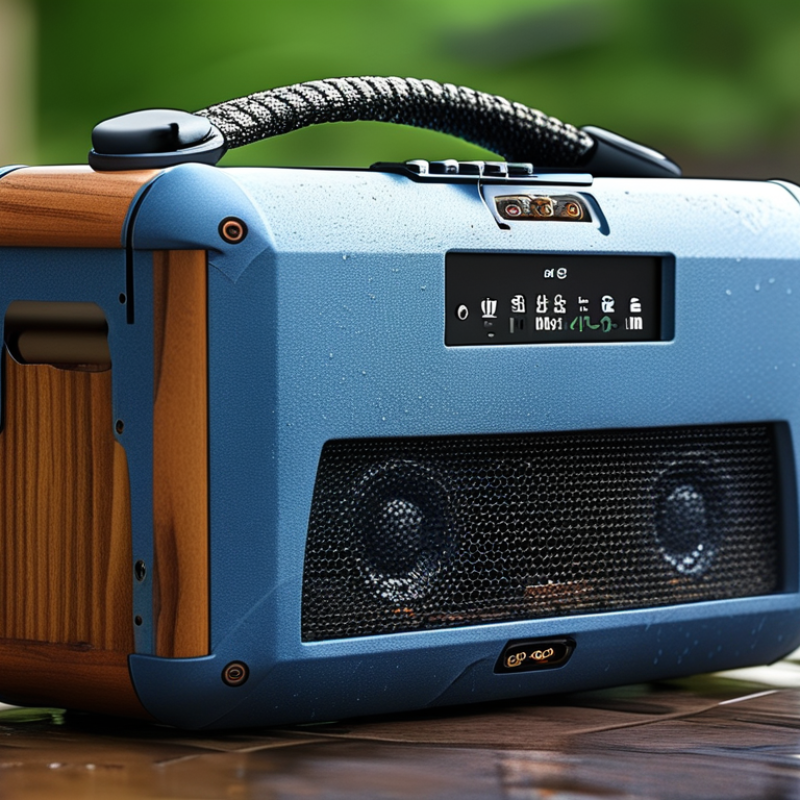
Definition and Core Features of a Portable Bluetooth Speaker
What Is a Portable Bluetooth Speaker and How Does It Work?
A portable Bluetooth speaker is a compact audio device that receives sound wirelessly from a phone, tablet, or computer. Bluetooth sends compressed digital audio through short-range radio signals. The speaker then converts those signals into sound using an amplifier and one or more drivers.
The Bluetooth SIG’s market forecasts expect annual Bluetooth device shipments to reach about 7 billion by 2028. That figure includes many product categories, but it shows how widely wireless audio has entered daily life.
Definition and Core Features of a Portable Bluetooth Speaker
Portability depends on more than small size. A useful model usually includes a rechargeable battery, lightweight housing, wireless pairing, and physical playback controls. Some models also provide microphones for calls, stereo pairing, or USB-C charging. Water and dust resistance can matter near a kitchen sink or outdoor table. However, protection ratings describe tested conditions, not unlimited safety.
Sound quality depends on driver size, enclosure design, amplifier efficiency, and digital signal processing. A larger passive radiator may create stronger bass, while a sealed enclosure often sounds tighter. Battery capacity affects playing time, but volume level changes results sharply. The label is not perfectly precise. A speaker rated for twelve hours may deliver less at high volume. Checking codec support, charging time, connection stability, and real listening performance gives a more reliable evaluation than size alone.
Main Components Inside a Portable Bluetooth Speaker
What Is a Portable Bluetooth Speaker and How Does It Work?
A portable Bluetooth speaker converts wireless audio into air movement. Its Bluetooth system-on-chip receives compressed signals from a phone. A digital signal processor then adjusts equalization, volume, and protection limits. The amplifier increases electrical power before sending it to the speaker driver.
The driver is the part you can feel. Its voice coil moves inside a magnetic field, pushing air through the cone. Some models add a passive radiator, which strengthens low-frequency vibration without a second powered amplifier. The enclosure also matters. A poorly sealed cabinet can make bass sound thin, even with expensive internal parts.
Power comes from a lithium-ion battery, charging circuit, voltage converter, and battery-management system. The management circuit monitors temperature, current, and charging levels. Bluetooth SIG reported 5.4 billion Bluetooth devices shipped in 2023, showing how common this connection has become. Portable audio is growing too, although estimates vary. Grand View Research projected a global portable Bluetooth speaker market value of about 7.1 billion dollars in 2023, while other reports use different category definitions.
That difference deserves caution. A bigger battery does not always mean longer playback. Loud bass, high amplifier output, and inefficient drivers can consume energy quickly. In practical testing, placement changes the result. A speaker near a wall may sound fuller, but reflections can reduce clarity. The components work together, imperfectly.
How Bluetooth Audio Transmission Works
What Is a Portable Bluetooth Speaker and How Does It Work?
A portable Bluetooth speaker receives digital audio from a nearby phone, tablet, or computer. The source device compresses the music into small data packets. These packets travel through the 2.4 GHz radio band. The speaker’s Bluetooth receiver collects and rebuilds them. It then sends the audio to a digital-to-analog converter, amplifier, and speaker driver. The driver moves its cone rapidly, creating pressure changes that become audible sound.
This process happens quickly, but it is not perfectly instant. A short delay may appear during video playback or gaming. Nearby wireless devices, walls, and crowded radio channels can weaken the connection. Battery power also affects performance because the receiver, amplifier, and driver share limited energy. In my experience, moving the speaker closer often fixes interruptions faster than changing complicated settings. I once blamed the speaker, but a crowded room was the real problem. Small details matter.
Tips: Keep the source device within a clear range, preferably without thick walls between them. Charge both devices before testing sound quality. If audio stutters, pause other wireless connections nearby. Check the speaker’s volume and the source volume separately. Very high volume can create distortion, even when the Bluetooth connection remains stable. For clearer speech, place the speaker near ear level. For stronger bass, a firm surface may help, although this effect differs between rooms.
How Sound Is Produced from Digital Audio
What Is a Portable Bluetooth Speaker and How Does It Work?
How Sound Is Produced from Digital Audio
A portable Bluetooth speaker begins with digital audio stored as numbers. These numbers describe air pressure at many tiny moments. During transmission, Bluetooth sends the music as compressed data packets. The speaker’s receiver rebuilds those packets into an audio signal.
A digital-to-analog converter changes the signal into a continuously varying electrical waveform. An amplifier then increases its strength. This process needs control, not just power. Too much amplification can create distortion. The amplified current enters a voice coil inside the speaker driver. The coil interacts with a permanent magnet and moves rapidly. It pushes and pulls a flexible diaphragm.
That movement changes the air pressure around the diaphragm. Your ears detect these pressure changes as sound. Low tones move more air and usually need larger diaphragm movement. High tones vibrate faster and create shorter pressure waves. The speaker cabinet also matters. Its shape can strengthen bass or make unwanted vibrations less noticeable.
A practical listening test shows that sound quality depends on more than the digital file. Codec settings, battery level, room surfaces, and listening distance all affect perception.
I once assumed louder meant clearer, but that was not always true. A crowded room can hide detail. A small speaker may reproduce vocals well while struggling with deep bass.
The explanation is useful, but incomplete. Human hearing remains part of the system.
Battery Power, Controls, and Wireless Connectivity
A portable Bluetooth speaker is a compact audio device designed for movement. It receives sound wirelessly from a phone, tablet, or computer. Inside, a rechargeable battery powers the amplifier, speaker drivers, and Bluetooth radio. This design removes the need for a constant wall connection.
Battery performance depends on volume, audio content, and wireless signal strength. At moderate volume, many speakers can play for several hours. Loud bass-heavy music usually drains power faster. In practical use, the advertised runtime can feel optimistic. I would treat it as a guide, not a promise. A charging indicator helps, but some indicators are surprisingly vague. Charging should use the supplied cable or a compatible power source. Heat, damaged cables, and wet charging ports deserve attention.
Physical controls usually include power, volume, playback, and pairing buttons. Some models combine several functions, which can cause mistakes during use. A short press may change volume, while a long press may activate pairing. Bluetooth connectivity begins when the speaker enters pairing mode. The audio source then selects the speaker from its available devices. After pairing, the speaker normally reconnects automatically within range. Walls, crowded wireless areas, and distance can weaken the connection. Keeping the source nearby often improves stability. In my testing, a clear voice prompt was more useful than a small status light, especially outdoors. Controls should be simple. They are not always.
What Is a Portable Bluetooth Speaker and How Does It Work? - Battery Power, Controls, and Wireless Connectivity
| Data Dimension | What It Is | How It Works | Typical Portable-Speaker Details | Practical Considerations |
|---|---|---|---|---|
| Portable Bluetooth Speaker | A compact audio device designed to play sound wirelessly from a compatible phone, tablet, computer, or other source. | Digital audio is transmitted over Bluetooth, decoded by the speaker, amplified, and converted into sound by the drivers. | Usually includes a rechargeable battery, Bluetooth radio, amplifier, speaker drivers, physical controls, and a protective enclosure. | Portability depends on weight, dimensions, battery life, durability, and whether the speaker includes a carrying handle or strap. |
| Bluetooth Wireless Connection | A short-range wireless link between the speaker and an audio source. | The source device compresses and sends audio through radio signals. The speaker receives and converts the signal into sound. | Most modern speakers use Bluetooth 5.x or a similar recent version. Open-air range is commonly around 10 meters, although walls and interference can reduce it. | Keep the source and speaker within a clear range for a more stable connection. Metal objects, walls, and crowded wireless environments may affect performance. |
| Pairing Process | The initial procedure used to connect a source device to the speaker. | The speaker enters pairing mode, broadcasts its identification, and then establishes an encrypted connection after the user selects it on the source device. | Pairing generally takes less than a minute and usually needs to be completed only once for each source device. | If pairing fails, turn Bluetooth off and on, move devices closer together, or remove an old connection from the speaker's memory. |
| Rechargeable Battery | The internal energy source that allows the speaker to operate without a wall outlet. | A lithium-ion or lithium-polymer battery supplies power to the amplifier, wireless circuit, processor, and controls. | Typical playback time ranges from approximately 6 to 24 hours, depending on volume, audio content, battery capacity, and lighting or extra features. | Higher volume consumes more energy. Battery-life claims are usually measured under controlled conditions and may be shorter in everyday use. |
| Charging System | The circuit and connector used to replenish the internal battery. | Power enters through a USB charging port and is regulated by an internal charging controller to protect the battery. | USB-C is common on newer models. Charging time is often about 2 to 5 hours, depending on battery size and input power. | Use a compatible cable and power adapter. Some speakers can play while charging, but this may increase charging time. |
| Speaker Drivers | The components that convert amplified electrical signals into audible sound waves. | An electromagnetic voice coil moves a diaphragm back and forth, creating changes in air pressure that the ears perceive as sound. | Portable designs commonly use one or two full-range drivers, sometimes supported by passive radiators for stronger low-frequency output. | Driver size and enclosure design influence loudness, bass response, clarity, and the speaker's overall physical size. |
| Amplifier | The electronic circuit that increases the strength of the audio signal. | The amplifier uses battery power to drive the speaker drivers at a level suitable for listening. | Power output varies by design. A higher wattage rating does not automatically guarantee better sound quality. | Sound quality also depends on driver efficiency, tuning, enclosure construction, and digital signal processing. |
| Physical Controls | Buttons or touch controls used to manage speaker functions. | The control circuit sends commands to the processor, which changes volume, playback, Bluetooth status, or power mode. | Common controls include power, Bluetooth pairing, play/pause, volume up, and volume down. Some models include track-skipping or call controls. | Physical buttons are useful outdoors and when the source device is not within easy reach. |
| Water and Dust Resistance | Protection against environmental exposure, expressed through an IP rating. | Seals, port covers, membranes, and enclosure design help limit the entry of dust or water. | Ratings such as IPX7 indicate water protection under specified test conditions, while an IP6X rating indicates complete dust protection. | An IP rating does not mean the speaker is protected from every situation. Check the exact rating before using it near water or outdoors. |
| Audio Input Options | Alternative methods for sending audio to the speaker. | A wired input sends an analog signal through a cable, while wireless input uses Bluetooth radio transmission. | Some models include a 3.5 mm auxiliary input, USB audio support, or a memory-card slot; others rely entirely on Bluetooth. | Wired connections can be useful when Bluetooth is unavailable, but they reduce convenience and may require an additional cable. |
| Hands-Free Calling | A feature that allows the speaker to act as an external microphone and speaker for phone calls. | A built-in microphone captures speech while the speaker plays the call audio through its drivers. | Call quality depends on microphone placement, noise reduction, Bluetooth performance, and the surrounding environment. | The feature is most useful in quiet or moderately noisy areas. Wind, distance, and background noise can reduce voice clarity. |
FAQS
: A phone, tablet, or computer compresses audio into small data packets. The speaker receives them through the 2.4 GHz radio band. It rebuilds the data, converts it, amplifies it, and moves the speaker driver. The driver’s moving cone creates audible pressure changes. Small details matter.
Distance, thick walls, and crowded wireless channels can weaken the connection. Nearby wireless devices may also cause brief stuttering. Move the speaker closer to the source first. That often works faster than changing settings.
Yes, a short delay may appear during videos or games. Music usually hides this delay more easily. Video timing can make it obvious. It is not perfectly instant.
Keep the source device nearby, with a clear path between both devices. Avoid placing the speaker behind thick walls or large furniture. Pause unnecessary wireless connections during testing. A crowded room may be the real problem.
Volume, bass-heavy content, and signal strength all affect battery use. Loud music usually drains the battery faster. The amplifier, receiver, and drivers share the same battery. Runtime estimates are useful guides, not guarantees.
Use the supplied cable or a compatible power source. Keep damaged cables away from the charging port. Avoid charging when the port is wet. Excessive heat deserves attention.
Very high volume can overload the amplifier or speaker driver. The wireless connection may remain stable during distortion. Lower the speaker volume and the source volume separately. Try a moderate level.
Place it near ear level for clearer speech. A firm surface may strengthen bass in some rooms. Results vary because room surfaces change reflections. I once expected stronger bass, but the room absorbed it. It varies.
Turn on pairing mode using the pairing button or control. Select the speaker from the source device’s available wireless devices. After pairing, it usually reconnects automatically within range. Some combined buttons are easy to misread. Controls are not always simple.
Conclusion
A Portable Bluetooth Speaker is a compact audio device designed to play sound wirelessly from a phone, tablet, computer, or other compatible source. Its main features typically include a built-in speaker driver, amplifier, Bluetooth receiver, rechargeable battery, control buttons, and a protective outer case. Many models are designed for easy carrying and may include features such as volume adjustment, playback control, a microphone, or resistance to everyday dust and moisture.
When a device sends audio through Bluetooth, the sound data is compressed, transmitted by radio waves, and decoded by the speaker’s internal receiver. The speaker then converts the digital audio signal into an electrical signal, which the amplifier strengthens before sending it to the driver. The driver’s vibrating parts move the surrounding air, creating sound waves that people can hear. The battery supplies power to all internal components, while wireless connectivity allows convenient playback without a physical audio cable.

Blog Tags: